The short version
Singapore has proposed, not yet enacted, changes to its collective-sale framework under the Land Titles (Strata) (Amendment) Bill. The headline change is a lower consent threshold for older private developments: 70% for estates aged 40 to 59 years and 65% for estates aged 60 years and above. The current 80% threshold would continue to apply to developments aged 10 to 39 years, while developments under 10 years old would remain at 90%.
The proposed package is not simply designed to make en bloc sales easier. It also raises the support needed to start a collective-sale committee, shortens the signature-collection period, lengthens the pause after a failed attempt, and increases the potential court-ordered addition to sale proceeds for objecting owners. Parliament must debate and pass the Bill, and it must receive presidential assent, before the changes take effect.
For owners, the practical message is clear: do not treat the proposed thresholds as current law or as a guarantee of a successful sale. Estate age, development potential, reserve price, owner expectations and buyer demand will still matter.
Why the proposed changes are focused on older estates
Singapore’s collective-sale regime was introduced in 1999. The Ministry of Law has said that many private developments have become significantly older since then, with some facing larger maintenance, repair and upgrading needs to remain safe and liveable. A redevelopment option may therefore be more relevant to an ageing estate than it is to a recently completed project.
CNA reported that official records show more than 360,000 private non-landed residential units are below 40 years old, compared with around 20,000 above 40 years. This explains the targeted structure: the proposal does not alter the main thresholds for the much larger group of newer developments, but creates differentiated thresholds for the older cohort.
Owners should also separate two questions. First, can the estate assemble the required consent? Second, will a buyer offer a price that makes a sale viable? Lowering a consent threshold only addresses the first question. It does not create redevelopment upside, solve planning constraints, or compel a developer to bid at an attractive price.
Detailed rulings: the proposed consent thresholds
The proposed thresholds are based on the age of the development:
| Age of development | Current threshold | Proposed threshold |
|---|---|---|
| Under 10 years | 90% | 90% (unchanged) |
| 10 to 39 years | 80% | 80% (unchanged) |
| 40 to 59 years | 80% | 70% |
| 60 years and above | 80% | 65% |
For an estate that is 45 years old, this would mean that a sale could potentially proceed with 70% rather than 80% consent, if the Bill becomes law and all other requirements are met. At 60 years or older, the proposed benchmark would fall to 65%.
That does not mean a simple headcount will always decide the outcome. Collective-sale requirements involve the prescribed measure of consent by share value and/or strata area, depending on the applicable framework. Owners should obtain advice specific to their development rather than assume that a percentage of units alone settles the question.
Extension to certain non-strata-titled developments
The Bill also proposes to extend the collective-sale regime to certain non-strata-titled private residential developments. These are developments where flat owners hold long leases over their flats but do not own the underlying land.
Under the current position described by CNA, such developments generally require unanimous agreement between flat owners and landowners before a sale. The proposal would allow a majority-consent collective sale, while adding safeguards for landowners’ interests. This is significant because it may offer an alternative route for qualifying estates that currently face a unanimity hurdle. The detailed application will still depend on the final legislation and the legal structure of the particular development.
Rules intended to reduce prolonged pressure on owners
The Bill pairs lower thresholds for older estates with procedural protections for owners who do not wish to sell.
1. A higher threshold to form a collective-sale committee
The support needed to requisition a general meeting to form a collective-sale committee would rise to 35% of owners, measured by share value or number of units. Today’s threshold is 20% by share value or 25% by number of units.
In practical terms, an initial group of owners would need broader backing before an estate enters the formal committee stage. This may reduce situations where a small group repeatedly initiates an exercise without a substantial base of support.
2. A shorter period to collect agreement signatures
A collective-sale committee would have six months instead of 12 months to secure signatures for a collective sale agreement. A shorter window is intended to reduce a drawn-out period of uncertainty and pressure for owners who are undecided or opposed.
For a committee, this makes preparation more important. Before collecting signatures, it should ensure that owners understand the proposed terms, the basis for the reserve price, the likely timeline and the implications of selling versus retaining their homes.
3. A longer break after a failed attempt
Following a failed collective-sale attempt, the waiting period before a fresh attempt would increase from two years to three years. During that period, a new attempt to form a committee would also be subject to the higher requisition threshold.
This matters for households who value stability. It is designed to prevent repeated attempts where support has remained insufficient, while allowing an estate to reconsider its position after a more meaningful pause.
4. A higher cap for awards to objecting owners
The proposed cap on court-ordered additions to sale proceeds for objectors would increase from 0.25% to 0.5% of the sale proceeds for each lot or flat, or S$2,000 per lot or flat, whichever is higher.
This does not automatically entitle every objector to an additional payment. It increases the pool available for court-ordered awards in the appropriate circumstances, recognising that non-consenting owners can face particular financial or practical consequences from a compulsory sale.
Transitional rules: which exercises may be affected?
If enacted, most amendments would apply to ongoing exercises where the first signature to the collective sale agreement has not been obtained before the commencement date. Where the first signature has already been obtained, the existing rules would continue to apply, preserving the basis on which owners entered that agreement.
Committees still collecting signatures would have a possible route to the new regime: they may convene a general meeting to decide whether to terminate the existing agreement and approve terms for a new one. If they do so, they would have seven months from the start date to meet the new threshold. This is an area where legal and property advice is especially important, because ending and restarting an exercise has consequences.
What owners should do now
Owners in established private-home areas, including District 11, District 12, District 14 and District 15, should begin with facts rather than speculation:
- Confirm the development’s legal age and title structure. The proposed 40-year and 60-year milestones are central, but eligibility should be checked accurately.
- Review the estate’s condition and future costs. Major repair, replacement and upgrading needs can be part of the decision, but they are not by themselves a reason to sell.
- Understand the sale economics. Ask how a proposed reserve price translates into estimated proceeds for different unit types, outstanding loans, replacement housing and transaction costs.
- Assess redevelopment appeal independently. Plot ratio, site size, tenure, location, planning rules and developers’ appetite affect value. A lower threshold does not guarantee a buyer.
- Respect different owner circumstances. An owner-occupier seeking a replacement home and an investor evaluating returns may reach different conclusions. A sound process makes room for both.
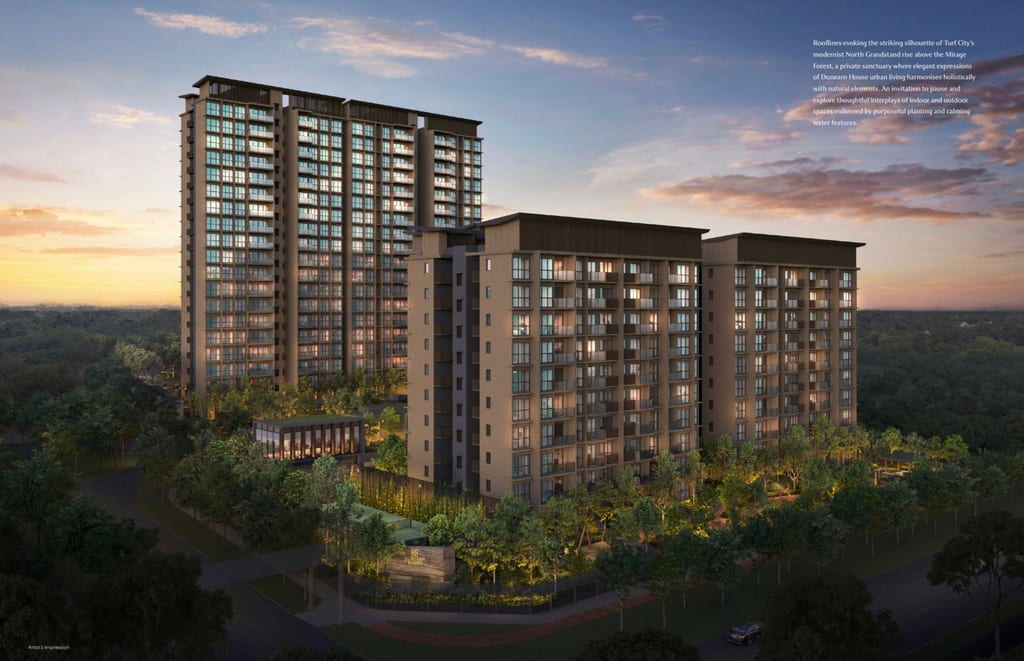
The same disciplined approach applies when comparing newer homes such as Dunearn House, a freehold city-fringe unit such as Neem Tree, or an established condominium home such as Vacanza @ East. These listings should not be assumed to qualify for the proposed older-estate thresholds; they are useful reminders that any en bloc decision eventually leads owners back to a personal housing decision: where to live or invest next, at what budget, and on what timeline.
Bottom line
The proposed Singapore en bloc rules for 2026 would make majority consent more attainable for qualifying older estates while strengthening safeguards against repeated or prolonged sale campaigns. They are still proposals. Owners should monitor the Bill’s parliamentary progress, avoid relying on headline percentages alone, and evaluate any potential collective sale against their own financial position and housing needs.
Sources
- CNA: New law proposed to lower en bloc thresholds for older condominiums (4 Aug 2026)
- CNA: En bloc sales framework under review by government (20 Nov 2025)
This article is general information, not legal, financial or property advice.
Disclaimer
This information is provided solely on a goodwill basis, and does not relieve parties of their responsibility to verify the information from the relevant sources and/or seek appropriate advice from relevant professionals, such as valuers, financial advisors, bankers and lawyers. For avoidance of doubt, PropNex Realty Pte Ltd, and its salesperson, accepts no responsibility for the accuracy, reliability, and/or completeness of the information provided. Copyright in this publication is owned by Sebastian Teo, and this publication may not be reproduce or transmitted in any form, or by any means in whole, or in part, without prior written approval.